My Sweet Clemence-wine
Devoté of Michel Rolland, Dauriac's Clemence has garnered a reputation as one of the better 'new' properties in Pomerol. I love to hate what Rolland does, and usually I find good reason to do so. Not so for the 2003 and 2006.
Pomerol 2003, Château La Clemence
Dark, ripe plums, slightly sweet, hint of licorice, with fresh vanilla bean. For such a hot vintage, where so many wines were excessively tannic, Michel Rolland's strategy of micro-ox seems to have worked- the tannins are firm, but round and mouth coating. Wonderfully complex, though very much on the fruit rather than the earthier notes, you really don't want it to stop. Sure, lots of oak, but there is enough substance to handle it.
Pomerol 2004, Château La Clemence
Goopy, sticky, sweet fruit. Lacking acidity. Not lacking oak. Very forced. Many people did a great job in 2004, not here.
Pomerol 2005, Château La Clemence
Very chocolaty, which at first sip reminded me of Nestle's Quick. But with a few swirls of the glass, it opens up, with expresso, licorice and some sweet fruit, and stifling oak. Not the most comfortable wine to have in your mouth except for the cool menthol finish. Interesting, though not particularly fun to drink, at least for the moment.
Pomerol 2006, Château La Clemence
Good, though very young, modern Bordeaux. A refreshing acidity, just a hint of chocolate, and very intense red fruit. The sweetness here is infers a perfect ripeness rather than excessive hangtime. While it is still oak-laden, it seems to have a better balance than the 2005. I have more hope for this in the long run than the 2005, despite the reputation of the 2005 vintage.
Friday, February 13, 2009

Wednesday, February 11, 2009

The Science of Smell
Dear Caveman:
When I read your wine descriptions, I find intriguing expressions such as: “Smells like a Mediterranean-style vegetarian pizza. Sun-dried tomatoes, black olives and herbs, with a touch of cherry vanilla." Where do these aromas come from? If they are actually the by-product of fermentation of crushed grapes in an oak barrel, then aren’t these conclusions about “sun-dried tomatoes, black olives and herbs, with a touch of cherry vanilla” socially constructed and ultimately subjective?
Ricardo
The short answer is that while the naming of these aromas may be subjective – in that each of us has our own “aroma and taste memory” and thus associates certain aromas with different things – there is a scientific explanation as to how a wine made only with grapes can evoke such un-grapey smells.
The sources of many of these aromas are volatile aromatic compounds. Some come from the grapes themselves or are by-products of the fermentation of the grape’s juice. But the ones that Ricardo was referring to are results of the aging of the wine, both in an oak barrel and in a bottle. This is still an area of wine that is not completely understood, but research is happening on a number of different fronts, so here is the science.
Aroma vs. bouquet
Émile Peynaud, a French oenologist considered by many to be the father of modern winemaking, drew a distinction between aroma and bouquet. For Peynaud, “aroma” is used to describe what we smell in a young wine – those grapey and fruitier aromas that result from the pressing of the grapes and the fermentation of the grapes’ sugars. If you have ever been in a room where a wine is fermenting, you will never forget the smell – ripe, juicy fruit mixed with a blend of alcohol and yeast. Open any bottle of Beaujolais Nouveau and you will have a good idea of what I am talking about.
Peynaud said “bouquet” is the result of aging a wine, which is where many of these non-grapey aromas can result. While the subtle chemical interactions are not completely understood, these new odours result from the interaction between those primary aromatic compounds and outside influences like oak barrels and oxygen.
It starts with the grape
So everything starts with those primary aromas, and thus the grapes you bring in from the field. The Chinon referred to by Ricardo evoked sun-dried tomatoes, black olives and herbs. I took a look at some other reviews I had done of wines made with the same cabernet franc grape, and I found one that described the wine (Saint-Nicolas-de-Bourgeuil 2005, Les Mauguerets-La Contrie) as smelling of “green peppers and violets … (and) a mix of raspberry and charcoal.” Why the difference?
Two University of British Columbia researchers, Steven Lund and Joerg Bohlmann, recently published a study that examined how a number of different factors affect primary aromas. They refer to the assortment of chemical compounds that cause aromas as volatile organic compounds (VOCs). How and where a grape is grown will ultimately affect the degree to which these grapes will show such things as varietal character as well as “the dozens to hundreds of chemical compounds that have yet to be discovered and characterized.”
So the same grape grown in different soils, in different years, will smell different. And the amount and proportion of these compounds to one another will ultimately affect the bouquet as a wine ages.
The molecules of scent
Lund and Bohlmann have broken down a wine’s aromatics into component compounds. So if your Gewürztraminer smells of flowers, it is in part due to “monoterpene compounds, chiefly geraniol and citronellol.” And if your Sauvignon Blanc tastes slightly grassy, the compound is part of the “methoxypyrazine family, specifically 2-methoxy-3-isobutylpyrazine,” which develops during the green stages of the grape but gets metabolized as the grape ripens. If your Sancerre tastes like freshly cut grass and your white Bordeaux doesn’t, although they are both made with Sauvignon Blanc, that is because the Bordeaux is often riper, so it will have less 2-methoxy-3-isobutylpyrazine.
How about black pepper in Shiraz? Rotundone is the chemical compound responsible for that one. A study done by the Australian Wine Research Institute of different vineyards in Australia showed that shiraz grapes showed different levels of this compound depending on the clones used, soil types and climate.
And what about the sun-dried tomatoes in my Chinon? According to Jamie Goode, “cis-3-hexenol is the prime culprit,” although cabernet franc also has the same leafy 2-methoxy-3-isobutylpyrazine as the Sauvignon Blanc I mentioned.
Bouquet
So as a wine matures and its bouquet develops, much like great cuisine, its odour becomes the sum of its component parts. Many of these VOCs are in a sense dormant when the wine is young. As VOCs react with one another, as well as with oxygen and alcohol, they will begin to show themselves.
A good example of this is oak. In a young, freshly bottled wine, the oak is often very pronounced, and in fact the wine has a distinct smell of wood. But as the wine ages, the vanillin – which is an oak-derived VOC and part of the family of aldehydes – will react with oxygen to give an odour of vanilla. Oak barrels are also a source of many of the cooking spices we find in wines, like cinnamon, coriander and nutmeg. Every barrel, depending on the wood source, will offer a different aromatic cocktail to the wine.
So this is why a grape can ultimately smell like “sun-dried tomatoes, black olives and herbs, with a touch of cherry vanilla.” But why doesn’t everyone smell that? Well, there is the cultural factor. If you have never smelled a sun-dried tomato, the name you give to such an aroma might differ. But there is also sensitivity: All noses are not created equal. Many VOCs are in such small concentrations that people with highly sensitive noses might pick up on elements that others miss.
But for the majority of us, it is simply a question of working our aromatic memories. Because wines can be complex, they often do not make us think of one particular aroma. This is why I sometimes will mention situations, like walking through a cool forest in the fall after a rain. How do you develop this memory? The first step is to load your memory with as many smells as possible.
So, as the proverb goes, stop and smell the roses – or the pizza, in my case.
Monday, February 09, 2009
Newer Franc
Chinon 2006, l'Huisserie, Domaine Philippe Alliet
Next to Joguet's Chene Vert is Alliet's new baby vineyard, filled with young vines. For you fans of Alliet, this is just plain weird- very ripe, sweet fruit, soft tannins, very little complexity, just fruit, fruit, fruit. But it works. This was not meant to be cellared, this is supposed to be guzzled. I would like to send a bottle of this to every fruit bombing winemaker. Don't over extract young vines. New oak does not a great wine make. Stop putting lipstick on 12 year olds.
Anjou Villages 2005, Clos Médecin, Domaine de Brizé
Strawberry sorbet, cherries, with a pinch of green pepper, cilantro, maybe even some cabbage. Strange mix when you think about it. The ensemble finishes on a spicy, juicy, peppery note. Easy drinking wine. Serve slightly chilled. Goes well with Tatziki.
Chinon 2004, Vieilles Vignes, Clos de la Dioterie, Charles Joguet
It's a summer meal in a glass, dessert and all. It's a piece of meat, cooked blue, covered in red berries and tarragon. The fruit then gets redder and sweeter, with a lime-like freshness. Your espresso is there as well. I am sure one day this will all come together.
Old Franc
Chinon 1996, Clos de l'Olive, Couly-Dutheil
Remarkably youthful. On opening it tries to say too much at once, having been bottled up for over a decade. But the aromatics were staggering from the first pour. Subtle bell pepper as a base, layers of spring flowers, comfrey, camomile, and on top of the pyramid, a sweet and perfectly ripe red cherry-plum. The mouth kicked in after an hour, when the wine attained something reasonably close to perfection. Drunk with ossobuco, with olives.
Chinon 2003, Theleme, Pascal et Alain Lorieux
After two hours in a carafe, this still has a remarkable vibrancy and youthful vigour. Those who believe cabernet franc cannot produce great wine (aside from Cheval Blanc) should decant a bottle of this, and revel in the sheer intensity and richness of the fruit - dark, serious, sanguine. The tannin is solid, and the acidity is just enough to maintain an exceptional freshness. Bordeaux lovers, take note: This is really good.
Friday, February 06, 2009
An Unfashionable Grape
I Love Cabernet Franc
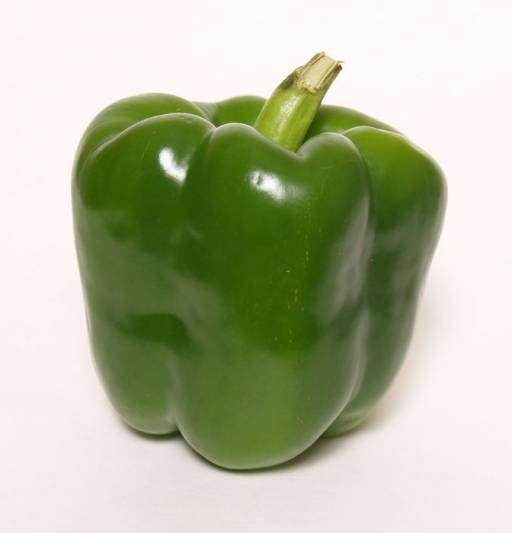
I had just finished writing my tasting note. Giving the remaining wine in my glass a good swirl, I took a deep, pensive whiff, and reread what I had written. Strawberry sorbet, cherries, cilantro, green pepper and cabbage - yes, they were all there. But then I thought, "Who is going to buy a wine that combines strawberry sorbet and cabbage?" While it made total sense in my glass, I can't see Dairy Queen making this its flavour of the month.
The wine in question was a red from France's Loire Valley, made entirely with cabernet franc. While this is one of the wine world's most important grapes - in that it is the sixth-most grown grape in France and plays a part in some of the world's greatest wines - more so than any other, people tend to love it or hate it.
This goes beyond the traditional New World vs. Old World schism. Yes, Robert Parker rarely reviews wines that are made entirely with cabernet franc, and its herbaceous quality is off-putting to many of you "fruit-forward" types. But I also know a number of sommeliers and wine freaks with very classic, European tastes who simply don't like cabernet franc.
I think it gets a raw deal. Many of the best examples are relatively inexpensive, complex and flavourful wines.
While it can make some fantastic wines, cabernet franc's most important contribution may be the grape that it helped parent: cabernet sauvignon. Recent DNA profiling has shown that one of the world's most illustrious varietals is in fact a cross of cabernet franc and sauvignon blanc.
Cabernet franc is vinified on its own, most notably in France's Loire Valley and other cooler climates, such as right here in Canada. Its major role, however, is in blending, especially alongside cabernet sauvignon and merlot. Depending on where you are in Bordeaux, for example, it can make up to 75 per cent of the final wine. On the left bank, in such hallowed communes as Pauillac and St. Estèphe, it is used by winemakers in small doses to "soften" cabernet sauvignon, as it adds both red fruits as well as signature aromatics - tobacco, flowers and its herbaceous quality.
On Bordeaux's cooler right bank, cabernet franc plays an even more important role. Many of the most celebrated wines of Pomerol and St. Emilion have significant proportions of cabernet franc in the blend. The most famous of these is the legendary Cheval Blanc, the St. Emilion Grand Cru whose recipe is generally two-thirds cabernet franc, one-third merlot.
Even you Napa Valley cabernet sauvignon fanatics may have been unwittingly drinking some cabernet franc. Many of California's top cabs have small amounts of cabernet franc in the blend, and more and more acreage is being devoted to growing the grape. These plantings are generally limited to cooler growing areas like Napa and Sonoma, where it can be positively juicy - showing sweet red fruits like raspberry and strawberry, and floral notes like violets.
But the controversial wines I am talking about here are those from the Loire. They come from such appellations as Chinon, Saumur-Champigny, Bourgueil and Anjou Villages. The styles can vary, from light and delicate summery wines to bigger wines that can age with grace and elegance, particularly those of Chinon and Saumur-Champigny.
Now back to strawberry and cabbage sorbet in my glass, which I have refilled since starting to write this. There is no doubt that herbaceousness is a quality in wine that is derided by a number of popular mags and their writers. It is definitely not fashionable. While I would agree that a wine with excessive herbaceous notes can be disagreeable, I really appreciate the subtle notes of peppers and other greenery found in this style of wine when it is done right. Aside from the flavour, I love its uniqueness.
This Anjou Villages in my glass is great. It was served slightly chilled, as an apéritif. Dinner was classic Greek: chicken brochettes, lots of oregano, basil and garlic, feta cheese. The wine never took control; its vegetal notes just supported the oregano and basil that perfumed our plate, the fruit and acidity refreshing the palate, cutting through the garlic and feta. It drank with ease.
The world of wine is incredibly diverse, and we are fortunate to live in a place where we have so much choice, where it is so easily accessible. Yves Saint Laurent said that "fashions fade, style is eternal"; let's hope the future of wine remains more style than fashion.
Tuesday, February 03, 2009
Two-faced Venice
Soave 2007, Classico, Inama, Italy white. There is such beauty in restraint. Subtle notes of peach, browning apples, maybe a touch of a bay-leaf type herb. But this is about drinkability- creamy, expansive, fresh and mineral. One of those wines that can be drunk with almost anything, at any time, and you never realize how much you liked it until after you reach for the bottle to refill your glass, only to find it empty. Drink now-2011.
Veneto Igt 2004, Cabernet Sauvignon, Marion, Italy red. Marion is the junior member of the Freaks of Veneto club led by Dal Forno and Quintarelli. This is Amarone meets Napa Valley cab, and most probably unlike any wine that you will have tasted. Massive, and lacking anything close to nuance for the moment, but you can sense that it is coming. Wait a while for this to come around. Drink 2011- 2017.
Sunday, February 01, 2009
The white wine apologist
Perhaps it’s because winter has decided to get nasty that I am feeling rambunctious. I will not take this lying down, Old Winter Man! Throw your ten feet of snow at me, let the thermometer outside my window drop 2 feet below the freezing line. I don’t care. I will still play outside, I will turn your snowy evenings into romantic couch and fireplace parties, and I will, despite you, continue to drink white wine.
I am a fanatical white wine drinker and I while I’ll admit that I do tend to drink more red in the winter, for me that means it is an even split- half red, half white. But I am rare, and I feel marginalized.
Many wine drinkers seem to look upon drinking white wine as a chore. When I work as a sommelier, I can’t tell you the number of times that I have pleaded with clients to at least give white wine a try. “It’s a scallop, sir, they taste of nothing,” I would say as I tried to explain why his adoration of Australian shiraz does not necessarily make it the right wine for this occasion. I could understand if it were chicken, or veal. There you have options, you could go either way. But scallops and other seafood require a different approach, something a red wine simply wasn’t made to do. I mean, both hammers and screwdrivers are useful tools, but hardly interchangeable. It’s the same thing for wine.
And I guess that’s my point. I look at wines as if they were tools, accessories to what’s sitting on your plate. While I have a penchant for white wine, I have no problem drinking red. I don’t really care. I am non-partisan, every wine has it’s time. The only thing I can say in favour of whites over reds is that most of my most memorable bottles have been white wines. And when I have served people in a restaurant, it’s often the pairings with white wines that have turned people on the most. Am I better working with white wines? Maybe, but a white wine’s subtler flavours combined with it’s higher acidity tends to integrate better with foods, and allows for more of the nuances of a well constructed recipe to show themselves.
But why am I talking about white wine now? I can hear some of you murmuring out there, “take a look outside Bill, aren’t things already white enough for you!” Exactly my point. If having to coerce people into drinking white wine by guilting them into some sort of obligation to the wine and food pairing gods- if that bums me out- then listening to people relegate them to cocktail parties and pool-sides on hot summer days pushes me over the edge. White wines can be more, so much more.
You can’t hate what you don’t know
A couple of summer’s ago, I put together two tasting menus at the restaurant where I was working as a sommelier. The clients had a choice- 5 different glasses of white or 5 reds. There was no substitution, no mix and matching. Well, despite that the split in wine consumption in Quebec is roughly 70-30 in favour of red wines, more than 60% of the clients chose the white menu.
While a few mentioned that they chose white because it was summer, the number one reason was that most people said that they simply don’t know white wines, and it had been years since they had drunk them. My theory is that most people started drinking wine with whites, and usually cheap bottles. We all remember those head-ache inducing, sweet, depanneur-purchased Liefraumilch. But as they started to buy more expensive bottles, for some reason they went red and all that most people remember about white wines are the headaches. Even the most experienced wine drinkers, who can speak volumes about their favourite reds, often have a tough time talking about white.
Versatility
I can tell you that putting together that white menu was far easier than the red. Why? The range in styles in white wines is far greater than reds. While red wines move between less tannic to more tannic, less fruity to more fruity, white wines can be so many different things. From high acid to rich and buttery, delicate and floral to nutty and spicey, completely dry to very sweet, still to bubbly.
This translates into more options at the dinner table. Aside from certain meats, either strongly flavoured game or very fatty cuts, there is always a white wine for the job. Seafood and most fish are obviously the domain of whites. Even the most subtle red tends to overpower these delicately flavoured dishes. And in terms of the type of flavours to harmonize with seafood, think of what almost always accompanies these plates - a wedge of lemon. Red wines are built along darker fruits or earthy notes, while white wines often have citrus flavours.
Buy beyond the seafood stuff, which even the most hardened red wine drinker will agree to drink a white wine, there are many other dishes which work as well, or better with white. Last week I talked about cheese, and how the salt in cheese can turn red wines bitter will amplifying the fruit in white. I know many people who are cooking more and more with Asian spices. Coriander, mint, cumin - all these spices work better with the more aromatic whites. And with mouth burning chile peppers? A slightly sweet wine will appease the nastiest habanero that you can find.
Then there are the white meats. When I choose a wine, I look at the sauce. Darker sauces will mean that I will choose a red, but if I am cooking with herbs, cheeses or cream sauces, I like white. A classic pork roast, served with apple compote is a natural with a rich chardonnay that often has the same apple flavours. Guinea Hen, and other slightly stronger tasting fowl is a natural mix with the nutty whites of the Jura.
And it doesn’t stop there. One of my favourite pairing tricks is white wine and steak tartar - nothing matches up like a honey-textured white. Great tartar is rich, spicy but subdued. White wines made with grapes like roussanne, grenache blanc or an aged chenin blanc combine richness with freshness, and display certain fruit overtures like browning apples and figs that seems to add more to the dish than a red, and make a better harmony in terms of texture.
Breaking down the prejudice
Now I am not suggesting that you should stop drinking red in favour of whites. All I am asking is that you give white a chance. When they are obviously the appropriate choice, drink white rather than red. Get to know and understand them, much like many of you gleefully explore the world of red wines. So as a start, let’s break down certain misguided myths about white wines.
myth: White wine should be served cold.
reality: Most whites should be served between 8C-12C to maximize its flavour and texture.
myth: White wines are wimpy, tasteless wines that are only good as a pre-dinner drink.
reality: White wines can be as complex, and at times more powerful than reds.
myth: White wines are acid and give you heartburn.
reality: While whites do have a touch more acidity, if you are sensitive to acidity there are a whole host of whites that have less total acidity than red wines.
myth: White wines don’t age
reality: My cellar is packed with white wines. While they tend to age faster than red wines, to fully appreciate most whites requires that they, like reds, spend a little time in a cool dark place.
myth: White wines give you headaches.
reality: While white wines usually have more sulphites than red wines, unless you are part of the under 1% of the population that is sensitive to sulphites, you have more of a chance to get a headache from the histamines in red wines.
Thursday, March 29, 2007
 And I would like to Thank Mr. Fender, Mr Gibson… and the guy from GrapeCrafter
It’s nice to be missed, and thanks to all of you who have sent emails inquiring as to wether I was A) Dead or B) Finished Blogging. Well, I hope this post proves unequivocally that neither are true.
While I join people like Tom who champion the exponential growth of blogs as a sign of the democratization of wine journalism, the cold, hard reality is that many are simply not worth reading and simply add to the white noise of excessive information. When there is nothing to say, well, there is nothing to say. I hit that wall and have stopped for a bit, giving me an opportunity to stop and think about many of the important issues facing the wine industry, what this blog should be.... and to learn note for note the lead from the Allman Brothers’ Blue Sky. JJ Cale leads are also proving pretty cool.
But I am not just passing my days in a pot induced haze with the Marshall amped to 10. Yes, it is a lot of fun. I have been reading lots and would like to clap my hands, shake my fists and offer a glass of Metras’ Fleurie to the guy from Grape Crafter.
I have written a number of posts on the subject of manipulations, additives and the role of technology in winemaking and Mr. Smith offers up one of the more interesting and lucid perspectives on modern winemaking that I have read in a awhile. While I don’t agree with everything that he says, he is dead on when he says that the real enemy is not the technology itself, but those many winemakers who are simply not good grape growers, not skilled enough in the chais and thus are forced to rely on “draconian measures’ to finish their wines.
The question still remains however, in the hand of the skilled winemaker, are these manipulations really necessary and how much is too much? The Enologix approach still makes me cringe. Part of the problem is the silence, and the somewhat paternalistic attitude that many in the wine industry have about talking about this issue. Many seem to share an image of the consumer as a half step above a complete moron, and that by divulging information about what manipulations and additives were used in making a wine will somehow scare them off. This is a load of crap. The sky is not falling (I check all the time). Most of the people actually interested in knowing about this are people who want to understand them better and see how they drink. Pure and simple. It does not have to be on the label, but this is the information age, put it on a website. If there is an image problem with their usage, let the people who care about it know more. Let us taste the wines with the full knowledge about what went into making them. Hell, I had breakfast with Peter Gogo (head winemaker from Penfolds) and he was more than happy to talk about how his wines were made. Did it make me like Penfolds any less? No.
Knowledge is always better than ignorance.
More to come … soon.
Friday, February 09, 2007

Wednesday, February 07, 2007
Luxurious Mid-Week Meal
Organic Veal and Gaja
The Meal

Veal chop in an Enoki mushroom sauce with roasted Fennel and Balsamically glazed Red peppers and baby Bok-choy
The Weingolber was asking about favourite organic produce and these veal chops are mine; creamy white flesh, delicate flavour and when properly cooked, tender and juicy. The operative word here is delicate, for both the sauce and wine which is why I went with Enoki mushrooms for the sauce. Mushrooms? Veal? Ah, Piedmont!
Langhe Docg, 1996, Sito Morecsco, Gaja (saq.2004....$48)
Few winemakers have attained rock-star status as much as the flamboyant Angelo Gaja. His wines are rich, concentrated, made to cellar and are so expensive that very few wine drinkers have ever even tasted one of his wines. Enter Sito Moresco, stage left. At under $50, it offers us non-millionaires the opportunity to partake, at least in part, of the world according to Gaja.

The Sito is a blend of Nebbiolo, Cabernet and Merlot in roughly equal parts that has been aged for 18 months in French oak. Like all Nebbiolo based wines, it tends to show itself after 5 years and reaches its apogee around 10. For an eleven year old wine, the 1996 was in fine form, with a seductive bouquet of black-red cherries laced with hints of clove and leather. This is old-style wine, with a soft and graceful texture that owes its delicate nature to its perfect acidity combined with patience, the right amount of cellaring to soften up the tannins. The result is pure luxury, a wine that supported without dominating; a character trait that I always appreciate. It reminds me why I seek out these these beautiful gastronomic moments. Ephemeral yes, but if we can string enough of them together….
Subscribe to:
Posts (Atom)